
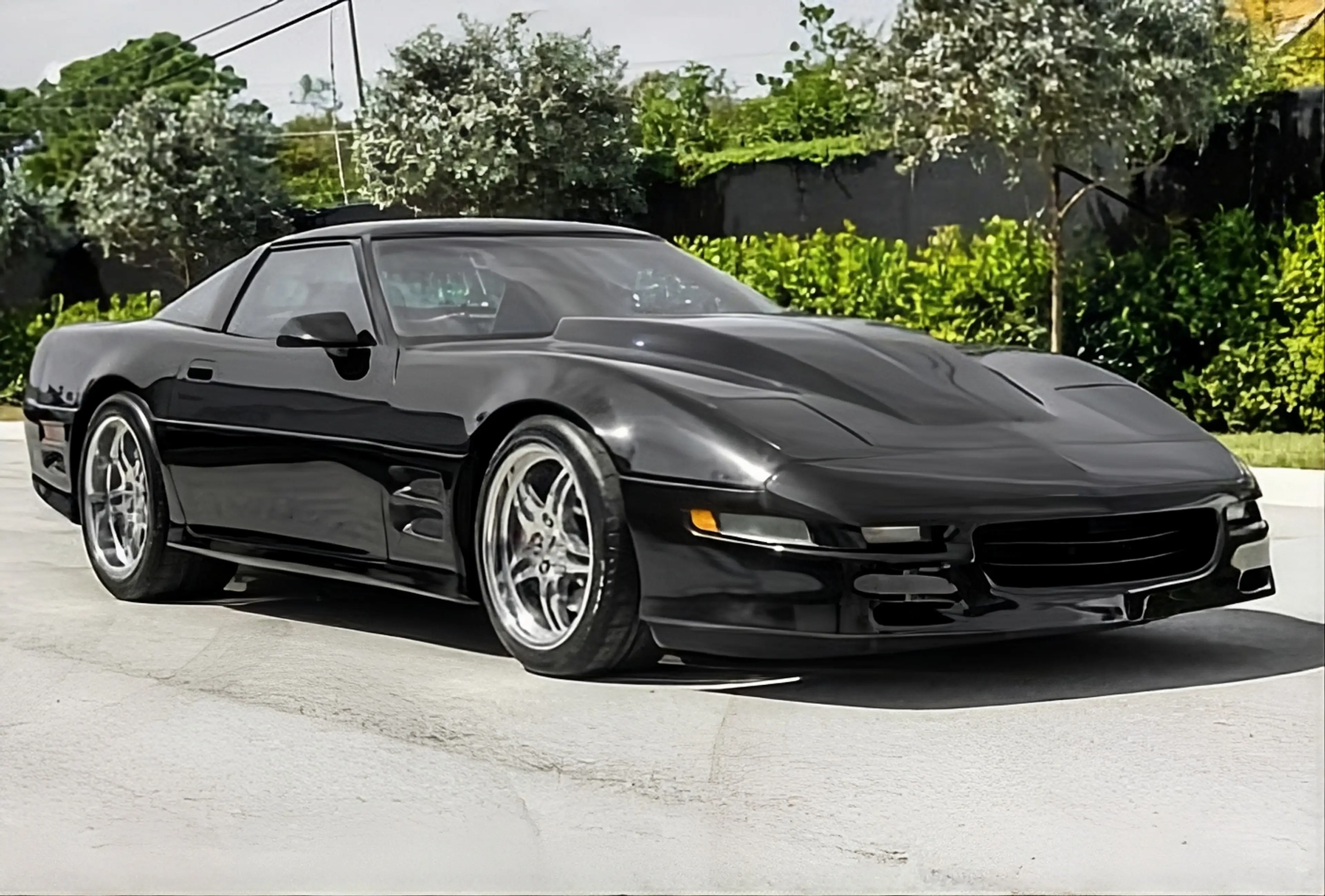
Everybody knows the public story. In nineteen ninety, the C4 ZR-1 arrived with the LT5 and instantly rewrote what an American performance car could be. It was faster, more exotic, more complex, and more confident than anything Chevrolet had ever sold.
What most people don't realize is that the ZR-1 didn't start as a finished idea. It started as a gamble.
General Motors wasn't just bolting a bigger engine into a Corvette. They were building something completely outside their comfort zone: an all-aluminum, four-cam, four-valve V-eight developed alongside Lotus. That alone meant the normal GM playbook wouldn't work. There was no off-the-shelf solution for what they were attempting. Every answer had to be discovered the hard way.
That's where the prototypes came in.
Before the ZR-1 ever earned its "King of the Hill" nickname, GM quietly assembled a small fleet of development cars. These weren't show cars or pre-production demos. They were tools—rolling laboratories built to be pushed, torn apart, rebuilt, and pushed again.
Some wore wide rear quarters before the shape was finalized. Others didn't. Some ran early versions of the LT5 that behaved nothing like the engine buyers would eventually get. Wiring was temporary. Hardware changed constantly. Calibrations were rewritten over and over as engineers chased heat issues, drivability quirks, emissions targets, and durability concerns.
These cars lived hard lives. They weren't preserved; they were consumed.
That's also why most prototypes are never meant to survive. From a corporate perspective, development cars are liabilities. They often contain undocumented parts, experimental castings, non-certified systems, and solutions that were never approved for public use. Once their job is done, the safest move is simple: destroy them.
And in most cases, that's exactly what happens.
But the ZR-1 program created a unique emotional problem. The engineers, technicians, and Lotus personnel working on these cars knew they were building something special. They weren't just solving technical challenges—they were reshaping the Corvette's identity. For the first time, America's sports car was being engineered to challenge Europe on equal footing, not with brute force alone, but with sophistication.
So when some of these early cars reached the end of their assigned life, not everyone could look at them as disposable scrap.
"That internal conflict is the real beginning of this story."
Because once a prototype exists, someone has to decide whether it disappears forever or survives as proof of how the legend was made.
The ZR-1 prototypes weren't clean, perfect machines. They were messy, compromised, and brutally honest. They showed the mistakes, the revisions, and the moments when the program almost didn't work. And that honesty is exactly what makes them historically dangerous.
A production ZR-1 tells you the result.
A prototype tells you the struggle.
That difference matters.
It also explains why certain development cars didn't follow the rules. Why a few weren't crushed when they were supposed to be. Why insiders quietly bent policy to preserve something they believed the future Corvette community would want to understand.
Those choices set the stage for the most famous survivor of them all: EX-5023, the ZR-1 prototype that was ordered to die, partially destroyed overseas, and still came back.
Coming Soon
Part 2: The Resurrection
The incredible story of how EX-5023 was saved from destruction and brought back to life.