
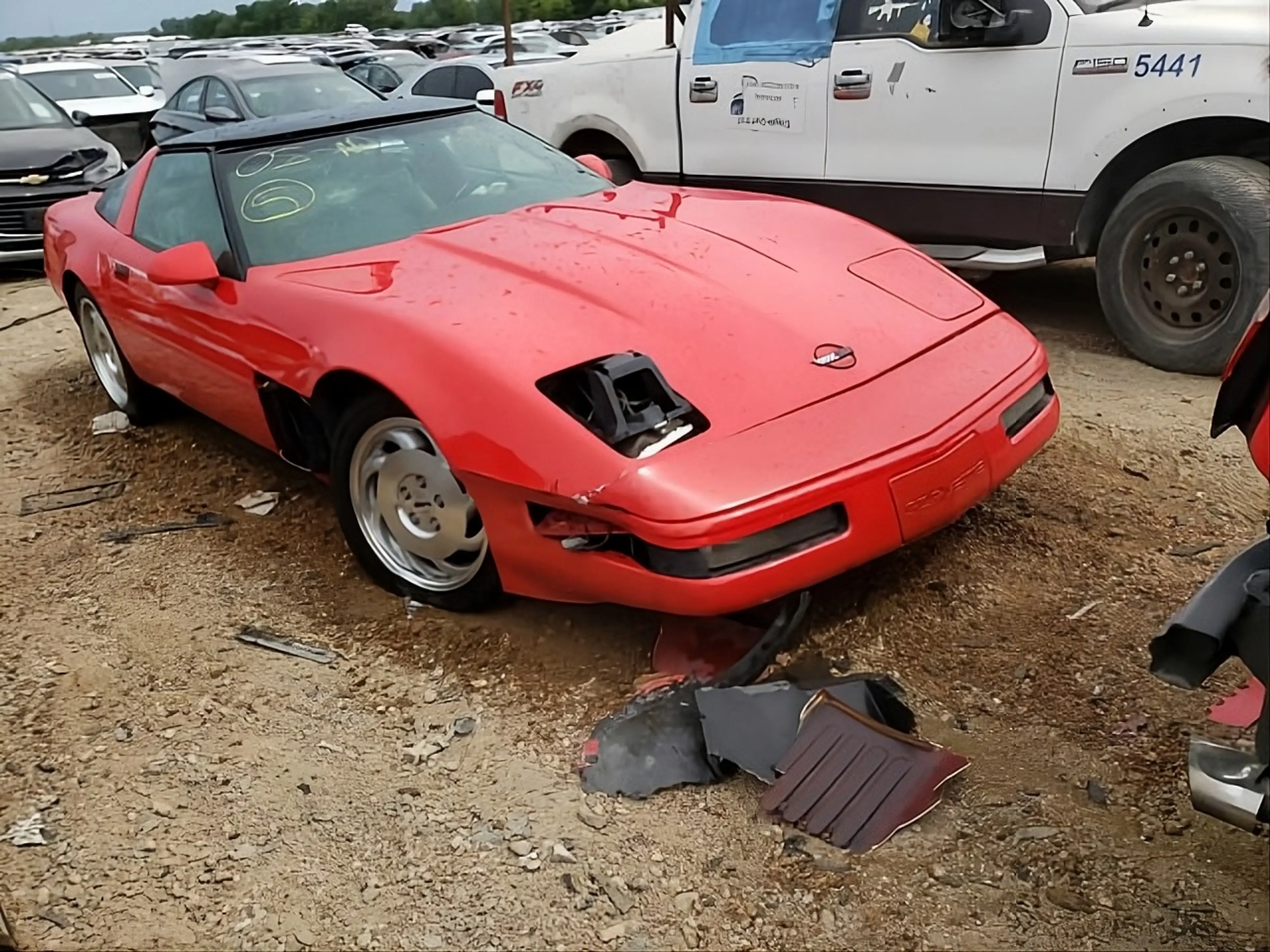
The Rescued Early ZR-1 Prototype: The Car That "Did Not Exist"
If EX-5023 survived violence, the earliest ZR-1 development cars survived denial.
If EX-5023 survived violence, the earliest ZR-1 development cars survived denial.
Before the wide-body styling was locked in, before the LT5 calibrations were finalized, before anyone outside GM's inner circle knew what was coming—there were prototypes that looked almost ordinary. Standard C4 bodywork. No flared quarters. No obvious clues.
These cars were ghosts from the start.
"On paper, they didn't exist. In the real world, they were the foundation of everything the ZR-1 became."
They carried early LT5 engines—versions that were still being debugged, still being understood. Cooling solutions were experimental. Wiring was hand-routed. Parts were fabricated on the fly when off-the-shelf components didn't exist yet.
These weren't cars built for show. They were built for answers.
The Problem of Existing
When the ZR-1 program reached production readiness, the earliest prototypes became a different kind of liability. They didn't match the final specification. They carried hardware that was never certified. They represented decisions that had been revised, rejected, or simply abandoned.
From a corporate perspective, the cleanest solution was erasure.
But erasure requires cooperation. And not everyone who touched these cars agreed with that plan.
"A production ZR-1 tells you the destination. These prototypes tell you the journey—every wrong turn, every breakthrough, every late-night decision that shaped the car America eventually met."
Rescued From the Shadows
The earliest rescued ZR-1 prototype represents something even rarer than EX-5023. It's a car from the period when the ZR-1 was still a question mark—when the entire program could have been cancelled, redesigned, or scaled back.
Its survival wasn't dramatic. There was no last-minute rescue from a crusher. Instead, it slipped through the cracks. It moved between hands. It sat. It waited. And eventually, it found someone who understood what it represented.
Today, this car stands as proof that the ZR-1's development wasn't a straight line. It was messy, uncertain, and filled with moments when the outcome wasn't guaranteed.
Why Denial Matters
The earliest prototypes were denied because acknowledging them would have complicated the official story. The ZR-1 was supposed to arrive fully formed—a statement of American engineering excellence. Admitting that it took years of failed experiments, revised approaches, and abandoned ideas didn't fit the narrative.
But that's exactly why these cars matter most.
They prove the ZR-1 wasn't inevitable. It was earned. Every improvement came from a problem that had to be solved. Every refinement came from a version that wasn't good enough.
"The car that 'did not exist' might be the most honest Corvette ever built. It shows the work. It shows the doubt. It shows the persistence that made King of the Hill possible."
The Complete Story
Together, the ZR-1 prototypes—EX-5023, the earliest development cars, and others still unaccounted for—form a hidden chapter of Corvette history. They weren't meant to survive. They weren't meant to be studied. They weren't meant to remind anyone of how difficult the journey really was.
But they did survive. And because they survived, the ZR-1's legacy is richer, more honest, and more human than any press release ever captured.
The King of the Hill didn't start on a throne. It started in garages, on test tracks, and in the hands of engineers who refused to accept "good enough."
These prototypes are the proof.
ZR-1 Prototype Series